6 Hidden Things Your Phone’s Volume Buttons Can Do Besides Adjusting Sound
Most smartphone users overlook these surprisingly useful button shortcuts.
⏱️ 1 min read 25/08/2026 22:35
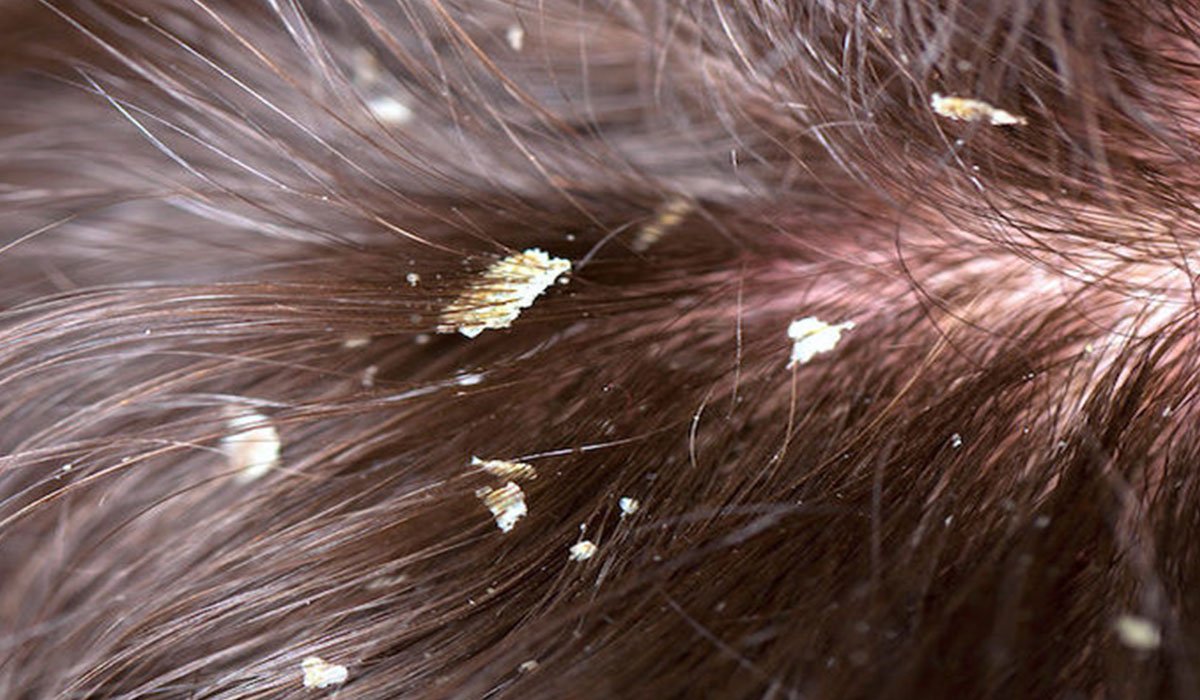
Dandruff is one of the most common scalp conditions, affecting millions of people worldwide. It causes white or yellowish flakes of dead skin to shed from the scalp and is often accompanied by itching. Contrary to popular belief, dandruff is not caused by poor hygiene alone. Instead, it usually results from a combination of factors, including skin oil, microorganisms, and individual sensitivity.
Here are 10 common causes of dandruff and what you can do to keep your scalp healthy.
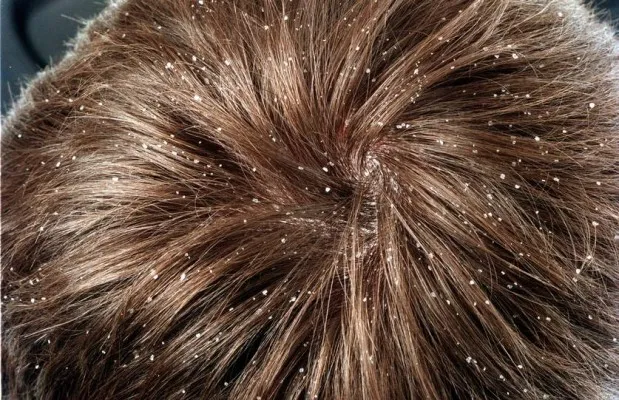
The most common cause of dandruff is an overgrowth of a naturally occurring yeast called Malassezia.
This fungus normally lives on everyone's scalp and feeds on sebum (the natural oil produced by your skin). In some people, it can trigger irritation and cause skin cells to shed more rapidly, leading to visible flakes.

Your scalp contains sebaceous glands that produce sebum to keep the skin and hair moisturized.
When too much oil is produced, it creates an environment where Malassezia can thrive, increasing the likelihood of dandruff.
Seborrheic dermatitis is a chronic inflammatory skin condition and one of the most common causes of persistent dandruff.
It typically causes:
Oily, yellowish flakes.
Red, irritated skin.
Itching.
It can affect not only the scalp but also the eyebrows, ears, sides of the nose, and chest.
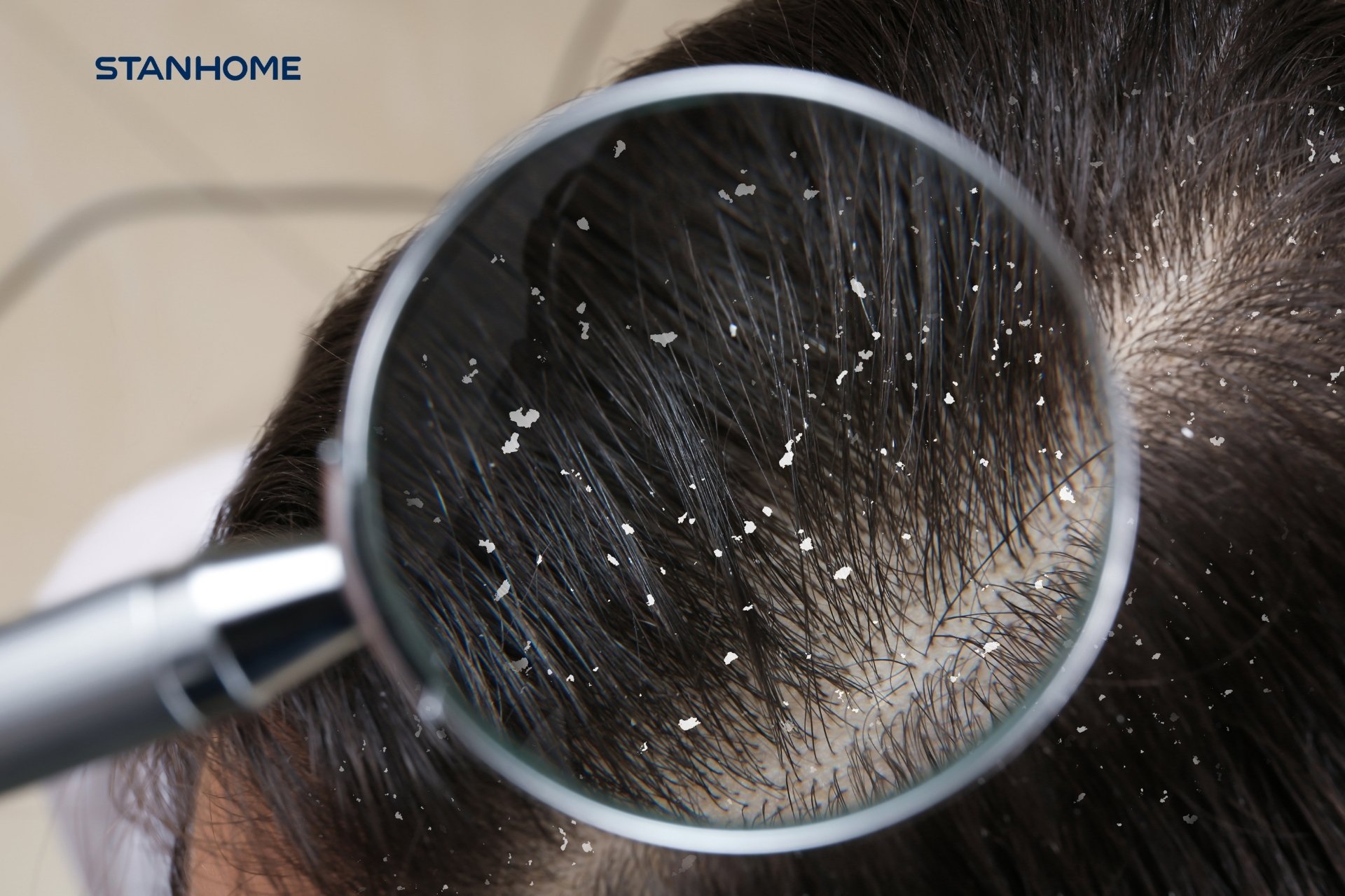
Not all flakes are caused by oily skin.
A dry scalp can also produce small, white flakes that may resemble dandruff.
Dry scalp is often associated with:
Cold weather.
Low humidity.
Frequent washing with harsh shampoos.
Hot showers.
Some people develop contact dermatitis after using certain shampoos, hair dyes, styling products, or fragrances.
This irritation may lead to:
Flaking.
Redness.
Itching.
Scalp discomfort.
Switching to gentle, fragrance-free products may help.
Not washing your hair often enough can allow:
Oil.
Dead skin cells.
Hair products.
to build up on the scalp, making dandruff more noticeable.
The ideal washing frequency depends on your hair type and scalp condition.
Stress does not directly cause dandruff, but it may worsen existing scalp conditions.
Chronic stress can affect immune function and increase inflammation, making dandruff flare up more easily.
Hormones influence sebum production.
This is one reason dandruff is more common during:
Puberty.
Young adulthood.
Periods of hormonal fluctuation.
Men often experience dandruff more frequently than women because they generally produce more scalp oil.
Some health conditions may increase the risk of dandruff, including:
Parkinson's disease.
HIV infection.
Weakened immune system.
Certain neurological disorders.
People with these conditions may develop more severe seborrheic dermatitis.
Cold, dry weather often makes dandruff worse, while some people notice improvement during warmer months.
Changes in humidity and temperature can affect both scalp moisture and yeast growth.
Most cases of dandruff can be managed with good scalp care.
Helpful tips include:
Wash your hair regularly.
Use an anti-dandruff shampoo containing zinc pyrithione, ketoconazole, selenium sulfide, or salicylic acid.
Avoid scratching your scalp.
Reduce stress when possible.
Eat a balanced diet rich in vitamins and minerals.
If one shampoo stops working, switching to a different active ingredient may be beneficial.
Consult a healthcare professional if:
Dandruff does not improve after several weeks of using medicated shampoo.
Your scalp becomes very red, swollen, or painful.
You experience severe itching.
You notice hair loss or thick crusts on the scalp.
The rash spreads beyond the scalp.
These symptoms may indicate seborrheic dermatitis, psoriasis, eczema, or another skin condition that requires medical treatment.
Dandruff is most commonly caused by an overgrowth of the naturally occurring Malassezia yeast, combined with excess scalp oil and individual sensitivity. Other contributing factors include seborrheic dermatitis, dry skin, stress, hormonal changes, and reactions to hair care products.
Although dandruff can be frustrating, it is usually manageable with appropriate scalp care and medicated shampoos. If symptoms are severe, persistent, or accompanied by significant redness or hair loss, consult a dermatologist for an accurate diagnosis and treatment plan.
Most smartphone users overlook these surprisingly useful button shortcuts.
A simple intersection puzzle is challenging logic and road-rule knowledge.
Experts say daily food choices may play a key role in brain aging.
New research raises concerns about a common compound found in breakfast staples.
A simple photo sparked confusion online as thousands mistook a fence for a lake.
A small purple butterfly carries a message of love, loss, and compassion.
Those strange avocado strings may reveal more than you think.
Spotted These Bugs Around Your Home? Here’s What You Should Know
Spotted This Insect in Your House? Here’s What It Could Mean
Seeing Silverfish at Home? Here’s Why You Should Pay Attention
I Soaked My Berries in Salt Water and Found These Strange White Larvae - What Happened?
Found an Old Cast-Iron Tool With a Strap? Here’s What It Was Used For
What Does a Three-Point Tattoo Mean? The Story Behind the Symbol
At First, It Looked Like Wet Trash Then I Saw What Was Moving Inside
Why You Should Think Twice Before Tying a Ribbon to Your Suitcase?
Had a Dream About a Loved One Who Passed Away? Here’s What It Could Mean

Scientists have finally determined when Elon Musk’s warning that “eventually, all life on Earth will be destroyed by the sun” could come to pass.


Face, wolf, or moon? Your answer may say more than you think.
🍳 What Happens When You Eat Eggs Every Morning? Doctors Explain…
❤️ Feeling Your Heartbeat While Lying Down? Here’s What It Could Mean…
A simple sleeping position may offer surprising benefits for your body.
Recognizing unusual symptoms early may help prompt timely medical care.
Most smartphone users overlook these surprisingly useful button shortcuts.
If You See This Type of Chicken, Doctors Advise You to Throw It Out Immediately
A simple intersection puzzle is challenging logic and road-rule knowledge.
Experts say daily food choices may play a key role in brain aging.
Could Lemon Water Help Blo:od Pressure? He Tried It for 2 Years and the Outcome Was Unexpected
New research raises concerns about a common compound found in breakfast staples.
🚨 9 Signs Your Blood Sugar May Be Trying to Tell You Something…
4 Early Warning Signs That Could Show Up Minutes Before a Stroke — Don’t Ignore Them
As one of the most nutrient-dense foods on the planet, salmon has long been celebrated by health experts and culinary enthusiasts alike. Beyond its rich flavor and versatility in the kitchen, this popular fatty fish offers an impressive array of health be
A simple photo sparked confusion online as thousands mistook a fence for a lake.
After 40, Your Nails Can Reveal Hidden Changes in Your Body—Don’t Ignore This
The Body Whispers First: Warning Signs of Breast Can.cer That May Appear a Year Before Diagnosis
A small purple butterfly carries a message of love, loss, and compassion.
Many people dismiss nighttime leg cramps as nothing more than a sign of overexertion or dehydration. While occasional muscle cramps are common and usually harmless, frequent or severe episodes can sometimes point to underlying health issues that deserve a
Your Thyroid Is Begging You to Stop Eating These 6 Foods Immediately
Can one simple food really lower blood sugar? Here's the real story.