Have You Ever Seen a Tiny "Bag" Stuck to Your Wall? There May Be a Living Creature Inside
At first glance, it looks like nothing more than a small piece of dust, lint, or debris clinging to the wall. Many people brush it off without a second thought.
But if you look closely, you may notice something surprising—it moves.
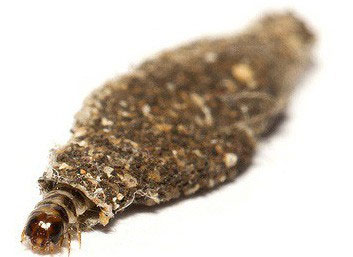
That tiny "bag" is often the portable home of a bagworm larva (also called a plaster bagworm or case-bearing moth larva), an insect that builds its own protective case from materials found in its surroundings.
What Is That Tiny Bag?
The "bag" isn't trash or dried mud—it's a carefully constructed shelter.
As the larva grows, it spins silk and attaches tiny bits of:
- Dust
- Hair
- Fabric fibers
- Sand
- Plant fragments
- Lint and other debris
The result is a portable case that blends almost perfectly into walls, ceilings, and furniture, making the insect difficult to spot.
Why Does It Build a Portable Home?
The case serves several important purposes:
- Camouflage: It helps the insect blend into its surroundings and avoid predators.
- Protection: The hard outer layer shields the soft-bodied larva from injury.
- Moisture control: The silk lining helps reduce water loss.
- Mobility: Unlike a cocoon that stays in one place, the bagworm carries its shelter wherever it goes.
When disturbed, the larva quickly pulls itself back inside the case until the danger has passed.
Where Are They Usually Found?
Bagworms are commonly seen in:
- On indoor walls
- Near ceilings
- Inside closets
- Around windows
- Bathrooms
- Garages
- Exterior walls and under roof eaves
They tend to thrive in warm, humid environments where dust and organic debris accumulate.
Are They Dangerous?
The good news is that bagworms are not considered harmful to people.
They do not:
- Bite
- Sting
- Spread diseases
However, some species may feed on natural fibers such as wool, silk, carpets, or stored fabrics. If their numbers become large, they can occasionally damage clothing or other household textiles.
Why Are They Appearing in Your Home?

Seeing a few bagworms indoors usually doesn't mean your home is infested. Instead, it often reflects conditions that help them survive, including:
- High humidity
- Dust buildup
- Poor ventilation
- Hair and lint accumulation
- Natural fabric fibers available as food
In other words, they're often responding to the environment rather than causing it.
How to Get Rid of Them
If you find one, removal is usually straightforward:
- Remove the case with a tissue or vacuum.
- Dispose of it in a sealed trash bag.
- Clean the surrounding area.
To reduce future appearances:
- Vacuum walls, ceilings, and corners regularly.
- Reduce indoor humidity.
- Improve ventilation.
- Store wool and other natural fabrics in sealed containers.
- Keep closets and storage areas clean and dry.
A Fascinating Survival Strategy
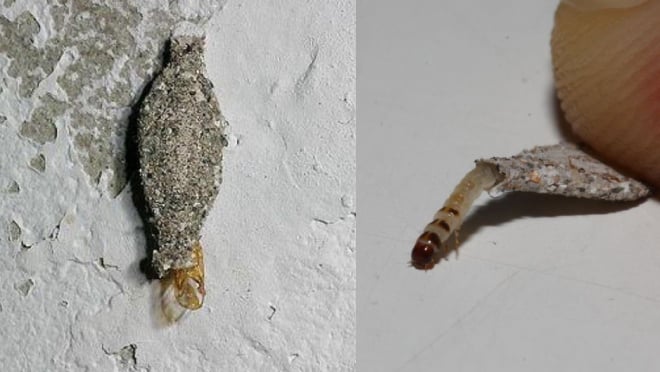
Although they may look strange, bagworms are remarkable little engineers.
Using only silk and materials from their surroundings, they construct a lightweight, portable shelter that protects them throughout their larval stage until they eventually transform into moths. It's one of nature's most impressive examples of camouflage and adaptation.
The Bottom Line
That tiny "bag" attached to your wall isn't just a piece of dust—it's likely the home of a bagworm larva. While these insects are generally harmless to humans, their presence can signal humid conditions, accumulated dust, or stored natural fibers that make your home an attractive habitat.
Regular cleaning, good ventilation, and proper fabric storage are usually all that's needed to keep their numbers under control.