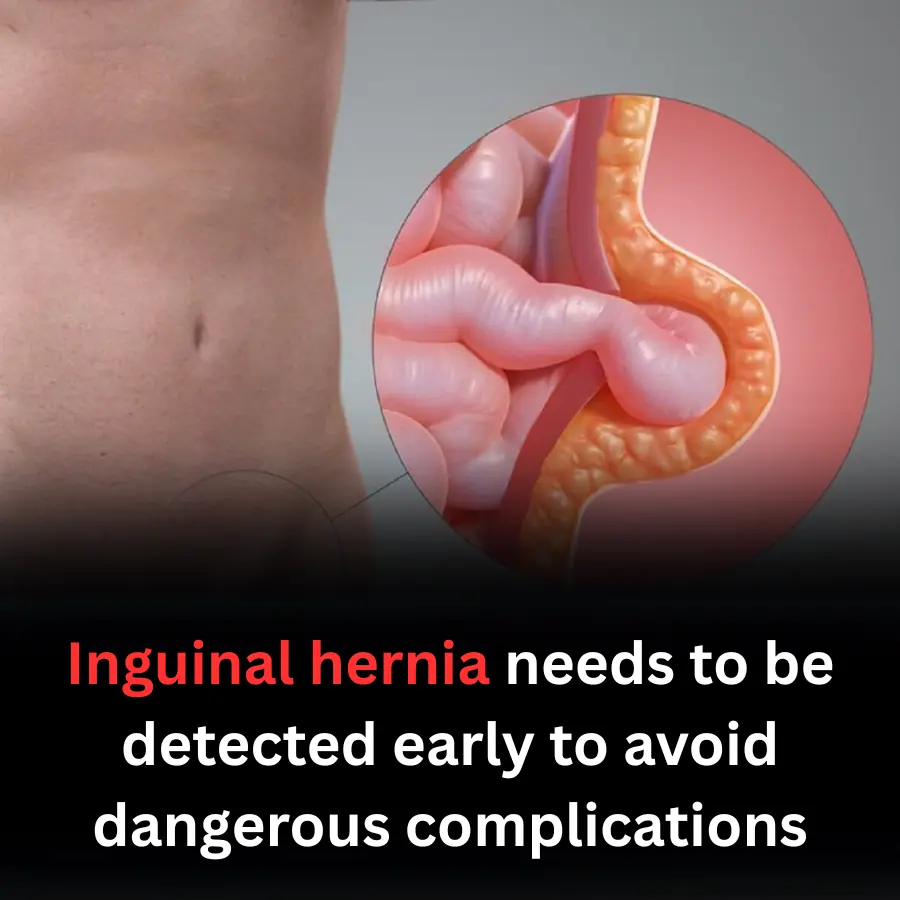
Inguinal hernia is a common condition, particularly in young children and older adults. Although it may not always pose immediate danger, delayed diagnosis and treatment can lead to serious complications such as bowel obstruction, tissue necrosis, and even life-threatening emergencies.
What is an inguinal hernia?
Inguinal hernia has a high prevalence, especially among men, with a rate of 27–43%, compared with 3–6% in women. Young children and individuals over 50 years of age are considered the groups at greatest risk.
High-risk individuals include:
-
Older adults with weakened abdominal muscles
-
People who frequently perform heavy labor
-
Those with chronic constipation, urinary retention, or difficulty urinating due to prostate enlargement — all of which increase intra-abdominal pressure
-
Individuals with conditions such as spermatic cord cysts or ascites
Early signs of inguinal hernia
-
A bulge appears on one or both sides of the groin, enlarging when standing or coughing and disappearing when lying down. In men, the scrotum may become enlarged and painful.
-
Discomfort or pain that worsens when lifting heavy objects or exercising and improves with rest.
In severe cases, abdominal organs may descend into the inguinal canal and become trapped, forming a bulge that cannot be pushed back in and causing intense pain — a hallmark of an incarcerated inguinal hernia. This occurs because the small intestine or omentum becomes ischemic, which can lead to bowel necrosis if not treated promptly.
The most dangerous complication is strangulated hernia, which can cause bowel necrosis and endanger the patient’s life. When bowel loops and their mesentery become trapped in the hernia sac and cannot return to the abdomen, blood flow is compromised, leading to obstruction and tissue death.
Patients may also develop a non-reducible hernia, in which organs inside the hernia sac adhere to each other, causing persistent discomfort.
The incidence of strangulated inguinal hernia ranges from 0.29% to 2.9%, with a mortality rate of 2.6–9%. Notably, if surgery is delayed for more than 12 hours, the risk of bowel resection increases significantly. Strangulation is more common in older patients: the prevalence in people over 60 is 9.8%, compared with 1.8% in younger individuals. In those over 65, both incidence and mortality rise markedly, reaching 55% and 15% respectively.
How is an inguinal hernia treated?
Inguinal hernia should be surgically repaired as soon as it is detected, regardless of age, to prevent strangulation and avoid severe complications.
Two main treatment methods are currently used:
-
Open surgery: The surgeon makes a small incision in the groin to close the hernia defect and reinforce the abdominal wall.
-
Laparoscopic repair: A modern, minimally invasive approach performed through several tiny incisions. Advantages include less pain, less scarring, and faster recovery.
Hernia repair is a safe procedure when performed in reputable medical facilities equipped with experienced surgeons, modern technology, and proper postoperative care.
Inguinal hernia in children
Inguinal hernia is common in infants, particularly newborns. The cause is failure of closure of the processus vaginalis (in boys) or the canal of Nuck (in girls), which connects the abdominal cavity to the scrotum or labia majora during fetal development. If this tract does not seal after birth, a hernia sac forms.
In boys, the hernia typically contains bowel loops. In girls, it may contain the ovary or fallopian tube. If the ovary becomes twisted or its blood supply is compromised due to strangulation, the child may experience severe pain and be at risk of ovarian necrosis.
Symptoms often appear suddenly and progress rapidly. When a bulge is noticed in the inguinal or scrotal area — whether reducible or not — parents should bring the child to a pediatric surgical specialist for evaluation and timely treatment to avoid dangerous complications.