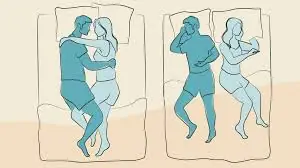
Many people panic quietly when they notice that a man turns his back while sleeping.
It’s easy to assume the worst — that he’s losing interest, upset, or disconnecting emotionally.
But sleep psychology shows something different.
A man’s sleeping position often reveals comfort, instinct, and personality more than relationship problems.
Here are the real reasons men turn their backs while sleeping — and what it truly means.
1. It’s his natural sleeping position, not a sign of rejection
Most men choose positions that feel physically comfortable, especially after long days of physical or mental stress.
Sleeping on the side or turning the back is extremely common because:
• it reduces pressure on the spine
• it helps breathing
• it prevents overheating
• it allows the body to relax fully
For many men, turning away has nothing to do with their partner — it’s simply the posture their body naturally prefers for deep sleep.
Comfort, not conflict, is usually the real explanation.
2. Men often overheat at night more than women
Biologically, men tend to have:
• higher muscle mass
• a slightly faster metabolism
• a higher resting body temperature
This means they generate more heat during sleep.
Turning away is often a way to cool down, especially if cuddling feels too warm after a while.
This does not mean he doesn’t want closeness — just that his body needs temperature regulation to rest properly.
3. Turning the back can signal trust and emotional safety
It may sound surprising, but sleep researchers argue that a person who sleeps with their back turned feels secure in the relationship.
You don’t turn your back on someone you fear.
You only do it when you feel comfortable, safe, and relaxed.
So rather than reading it as distance, it may actually reflect stability and emotional comfort within the relationship.
4. He may need personal space to decompress
Men often process stress internally.
Work pressure, worries, or mental overload can make them crave physical space to unwind.
Turning the back while sleeping might simply be a way to mentally detach from the day and allow the brain to calm down.
This has nothing to do with love — it’s about restoring energy.
Partners who understand this often feel more secure because they realize it’s a natural self-regulation behavior.
5. Different sleep rhythms lead to different positions
A man who falls asleep faster may assume a position that works best for him.
A partner who stays awake longer might then notice the “back turned” posture and feel concerned.
But sleep rhythm differences are normal:
• some people shift to the edge of the bed
• some curl inward
• some turn outward without thinking
Most of these movements are unconscious and unrelated to emotional connection.
6. Turning the back can actually increase sleep quality for both partners
Many couples sleep better when they aren’t in constant physical contact.
Light touches can interrupt deep sleep cycles.
A slight turn creates space that allows both people to rest deeply, leading to:
• better mood
• healthier communication
• stronger emotional connection
A well-rested partner often shows more affection during waking hours.

7. Sometimes, it does reflect emotional distance — but context matters
While most back-turning is harmless, patterns combined with behavioral changes may signal something deeper:
• Avoiding conversations
• Lack of affection during the day
• Emotional withdrawal
• Irritation or coldness
In these cases, the sleeping position isn’t the cause — it’s a symptom.
The real issue lies in communication or emotional stress within the relationship.
But sleep posture alone is not enough to draw conclusions.
So what does it truly mean?
A man turning his back while sleeping usually signifies:
• comfort
• trust
• natural sleep preference
• temperature regulation
• personal space
• stress release
It is not automatically a sign of fading love or emotional distance.
To understand a relationship, look at what he does while awake — his attention, kindness, support, and consistency matter far more than the direction he faces while sleeping.
Bottom line
Sleeping positions reflect body needs, not heart decisions.
A man who turns his back is usually just trying to sleep well, stay cool, or find comfort.
Love is shown in actions, not sleep posture.
Understanding this can prevent unnecessary anxiety and strengthen emotional connection.