Most people walk past buildings every day without paying much attention to the details. But when you stop and notice the small things — like window bars that curve outward at the bottom — you begin to realize that architecture often hides practical reasons behind beautiful designs.
What looks purely decorative is actually the result of centuries of tradition, safety needs, and cultural habits.
Here’s the real reason why some window bars bend outward at the bottom — something many people have never been told.
1. The curved design was originally created for safety
In older European and Mediterranean cities, windows often sit close to public walkways.
A straight iron grille keeps the home secure, but it can make the window feel claustrophobic or restrict airflow.
By curving the bars outward at the bottom, homeowners gained extra protective distance without sacrificing safety.
Instead of placing the bars flat against the window, the outward bulge:
• prevents intruders from getting close
• makes climbing or forcing entry harder
• keeps the structure strong against impact
This added curve acts like a security shield while still giving the window breathing room.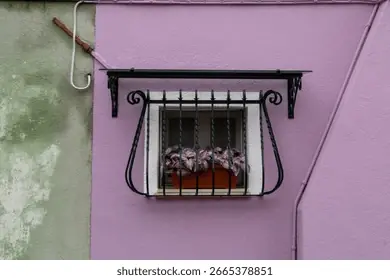
2. The design creates extra space — almost like a mini balcony
Over time, people realized that the curved bars created a small pocket of usable space.
This mini shelf became incredibly practical, especially in older cities where balconies were rare or expensive.
Residents used the curved window space to hold:
• flower pots
• herbs
• drying cloths
• small household items
• decorative pieces
In many Mediterranean cultures, this became iconic.
The curve allowed sunlight to reach the plants while keeping them safe behind the ironwork — a perfect blend of beauty and utility.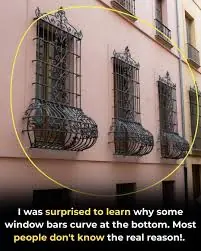
3. They improve ventilation and cooling inside the home
Before air conditioning existed, controlling airflow was essential.
Straight bars limit how wide you can open a window.
Curved bars, on the other hand, allow:
• larger window openings
• better circulation
• cooler indoor temperatures
The outward bulge gives the window more freedom to swing open, letting in maximum fresh air while still maintaining safety from the outside.
In warm climates, this design became a natural cooling system that required no electricity.
4. They protect the window from damage
Curved bars act like a protective “cage” around the glass.
If someone walking by accidentally bumps into the structure, or if an object hits the façade, the curved grille absorbs the impact instead of the window itself.
For homes close to traffic or narrow streets, this added protection significantly reduces the chances of broken glass.
5. They add architectural elegance — a blend of safety and art
Ironworking has long been an art form, especially in Spain, Italy, Portugal, and parts of Latin America.
The curved bars allow artisans to create:
• floral shapes
• spirals
• woven patterns
• traditional motifs
The outward curve provides depth and dimension, making the façade more visually interesting.
What started as a safety feature became a beloved architectural identity across many regions.
6. The curve helps with privacy without blocking light
A straight grille sits directly in front of the window, making the opening feel boxed in.
But a curved design shifts the bars outward, creating space between the interior and exterior.
This offers two benefits:
• more natural light enters the room
• the homeowner retains a degree of privacy
People passing by cannot easily see directly inside, yet sunlight still flows freely.
7. In some cultures, the curve symbolizes openness and hospitality
In parts of Southern Europe and Latin America, the curved grille became a symbol of warmth and welcome.
People would lean on the bars, talk to neighbors in the street, or place small decorative objects outside their window.
The curved bars turned the window into a social connection point, bridging private life and the public walkway.
Bottom line
What looks like a simple decorative bend in a window grille actually carries deep cultural, architectural, and practical meaning.
These curved bars provide safety, airflow, space, beauty, and even social connection.
They’re a reminder that design is rarely accidental — it evolves from the needs, habits, and creativity of the people who came before us.
Next time you walk past a building with curved window bars, you’ll know the real story behind them — a mix of tradition, protection, and clever design that most people never notice.