My mother controlled our family with love and i didn’t see it until i left
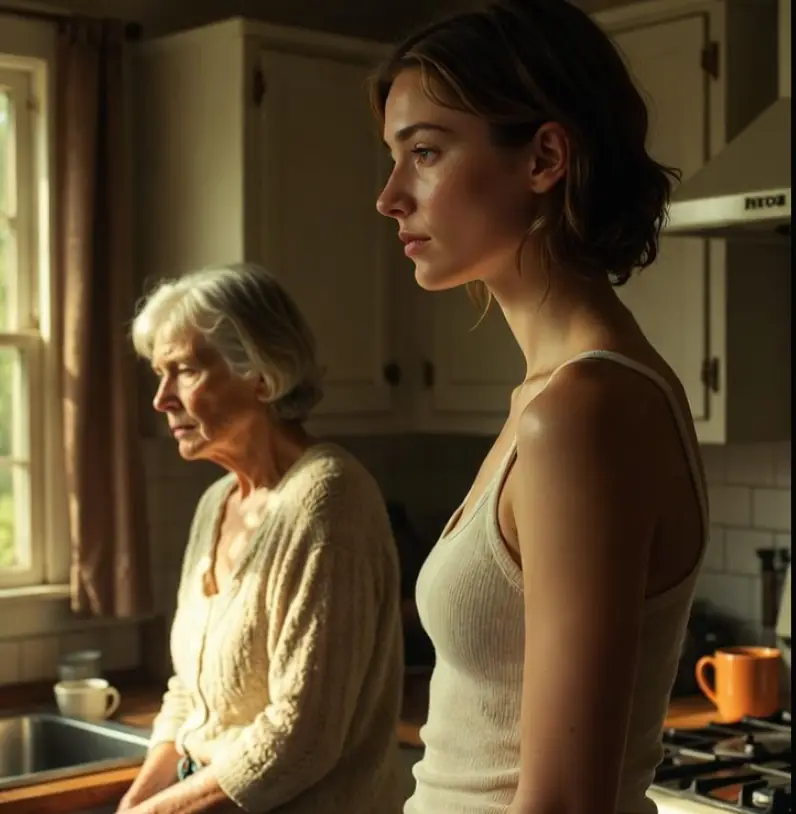
The farmhouse where I grew up in rural Pennsylvania was always filled with the scent of fresh lavender and simmering vanilla. To any outsider, our home was a sanctuary of warmth and maternal devotion. My mother, Margaret, was the undisputed center of that universe. She was a woman who didn't raise her voice, who never used a harsh word, and who seemed to live entirely for the well-being of her husband and three children. In our small community, she was held up as the gold standard of motherhood—selfless, nurturing, and infinitely patient.
I spent twenty-four years believing that I was the luckiest daughter in the world. I believed that my mother’s constant presence in every corner of my life was the ultimate expression of love. I didn't see the invisible threads she was weaving around us; I only saw the beautiful tapestry they created.
The control was never overt. It didn't look like a closed door or a shouted command. It looked like a gentle sigh when I mentioned wanting to spend summer break at a camp away from home. "Of course you should go, Clara," she would say, her voice soft and slightly trembling. "I just worry about your asthma in that mountain air, and I’ll miss our morning tea so much. But your happiness is all that matters to me."
Inevitably, I would stay. I would stay because I didn't want to be the reason for that sigh. I didn't want to be "selfish." My mother had mastered the art of making her needs feel like my own moral obligations. She didn't tell me what to do; she made me feel that doing what she wanted was the only way to be a "good" person.
I moved to Chicago two years ago for a graduate program. It was the first time I had lived more than twenty miles from her kitchen table. The first few months were a blur of intense, crushing guilt. Every time I didn't answer her daily 4:00 PM phone call, I felt like I was physically wounding her. If I mentioned a new friend she hadn't vetted, her voice would take on a hollow, distant quality. "She sounds lovely, dear. I just hope she values your kind heart as much as we do. People in the city can be so transactional."
The realization didn't come in a sudden explosion of anger. It arrived in the quiet moments of my new life, during the mundane interactions with people who didn't require me to manage their emotions. I started noticing the way I would hesitate before making a simple decision—what to eat for dinner, what color to paint my bedroom—wondering, subconsciously, what my mother would think. I realized that for my entire life, I hadn't been making choices; I had been seeking permission.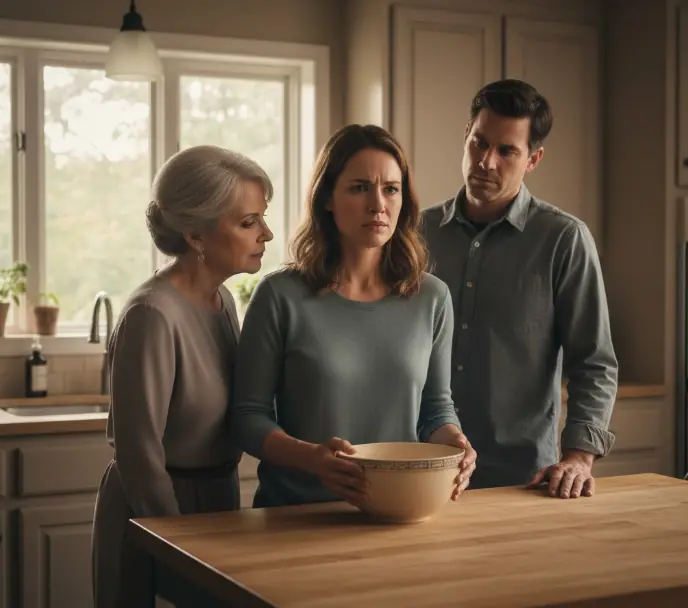
The drama of this realization was entirely internal. It was a slow, painful dismantling of my own history. I began to look back at my childhood through a different lens. I remembered how she had subtly alienated my father from his own brothers, always under the guise of "protecting his peace" from their "difficult personalities." I remembered how my older brother had given up a scholarship to an out-of-state university because Mother had a "spell of nerves" that only his presence could soothe.
I saw now that her love was a gilded cage. It was a love that required us to remain small so she could remain necessary. She didn't want us to fail, but she didn't want us to fly too far, either. Every achievement was filtered through her; every struggle was an opportunity for her to be the savior. It was emotional manipulation practiced with the precision of a master artist, all wrapped in the softest, most caring language imaginable.
The distance between us grew, not because I stopped loving her, but because I started protecting myself. Our phone calls became shorter. I stopped sharing the intimate details of my life—the small doubts, the new romances, the career anxieties. I realized that any vulnerability I gave her was a tool she could use to pull me back toward her.
"You've changed, Clara," she said during a visit home last Thanksgiving. We were in the kitchen, and she was trying to show me, for the tenth time, how to fold her "signature" pie crust. "You seem so cold. So distant. Is it that city? Or have I done something to upset you?"
She looked at me with those wide, watery eyes—the eyes that used to make me crumble. For the first time, I didn't feel the urge to apologize. I didn't feel the need to reassure her that she was the center of my world.
"I haven't changed, Mom," I said, my voice steady and calm. "I’ve just grown up. I'm learning how to stand on my own feet without you holding my hand."
"But I only want to help you," she whispered, her lip quivering. "I love you more than life itself."
"I know you do," I replied. "But love shouldn't feel like a debt I can never pay off. Love shouldn't make me feel guilty for having a life that doesn't include you at every turn."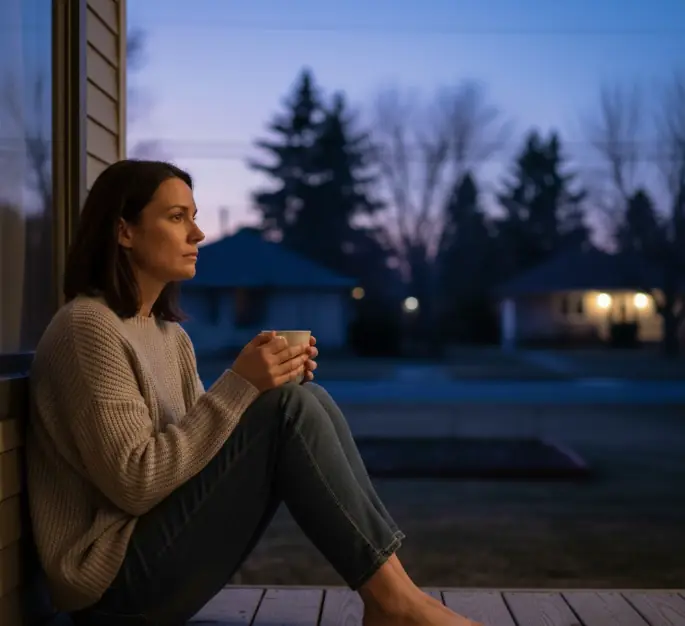
The silence that followed was heavy, but it wasn't the suffocating silence of my childhood. It was a boundary. I watched her realize, in that moment, that the threads had snapped. She couldn't reach me with a sigh anymore.
The aftermath was a period of intense mourning—not for my mother, but for the version of her I had believed in. I had to accept that the woman who had tucked me in every night was also the woman who had stunted my emotional growth. I had to navigate the "quiet pain" of knowing that our relationship would never be the warm, easy thing I once thought it was.
Today, I am redefining what healthy love looks like. I am learning that real love is a door that opens outward, not a tether that pulls you back. It is a support system that encourages you to be your largest, most authentic self, even if that self moves away. I have found a partner who listens without judging and who supports my decisions without making them about himself.
I still call my mother. I still visit the farmhouse. I still appreciate the scent of lavender and vanilla. But I no longer drink the tea if I’m not thirsty. I no longer apologize for a life that makes me happy. I have learned that I can love her from a distance—both physical and emotional—and that my autonomy is not a betrayal of her devotion.
I am no longer the "good girl" who manages her mother’s heart. I am a woman who has claimed her own. And in the quiet of my own apartment in Chicago, far from the subtle shadows of my childhood, I have finally found the warmth I was always looking for—the warmth of being truly, independently free.