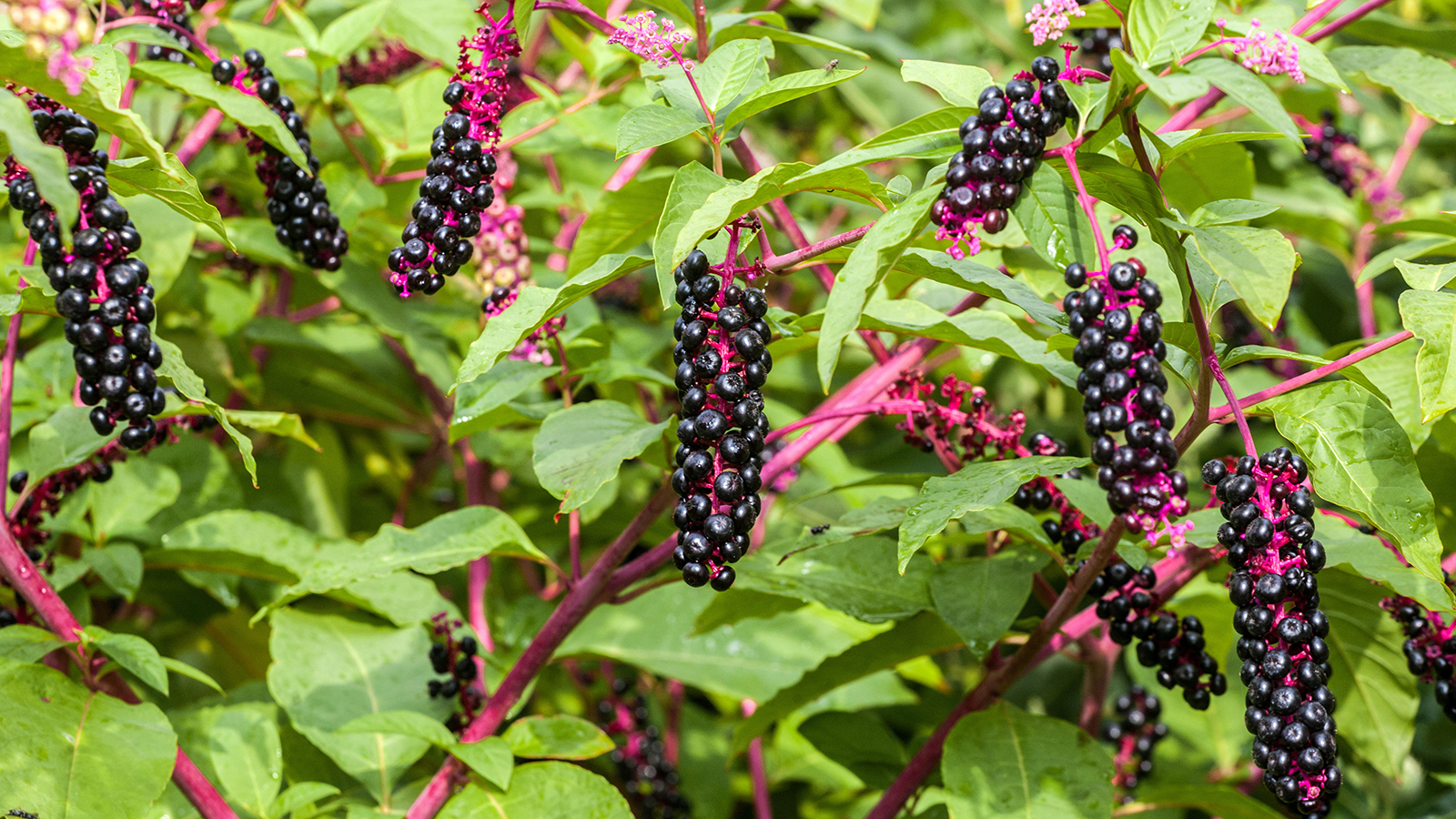
Pokeweed is one of those plants that often captures attention before it raises concern. With its vibrant magenta stems, dark purple berries, and broad green leaves, it can look ornamental, almost decorative in late summer landscapes. Birds flock to it. The berries resemble clusters of glossy grapes. To the untrained eye, it may seem harmless — even inviting.
However, behind its striking appearance lies a plant with significant toxic properties. Known scientifically as Phytolacca americana, pokeweed is native to North America and has spread widely across fields, roadsides, forests, and even suburban gardens. While it has historical uses in traditional practices, modern toxicology makes one thing clear: pokeweed should be approached with caution.
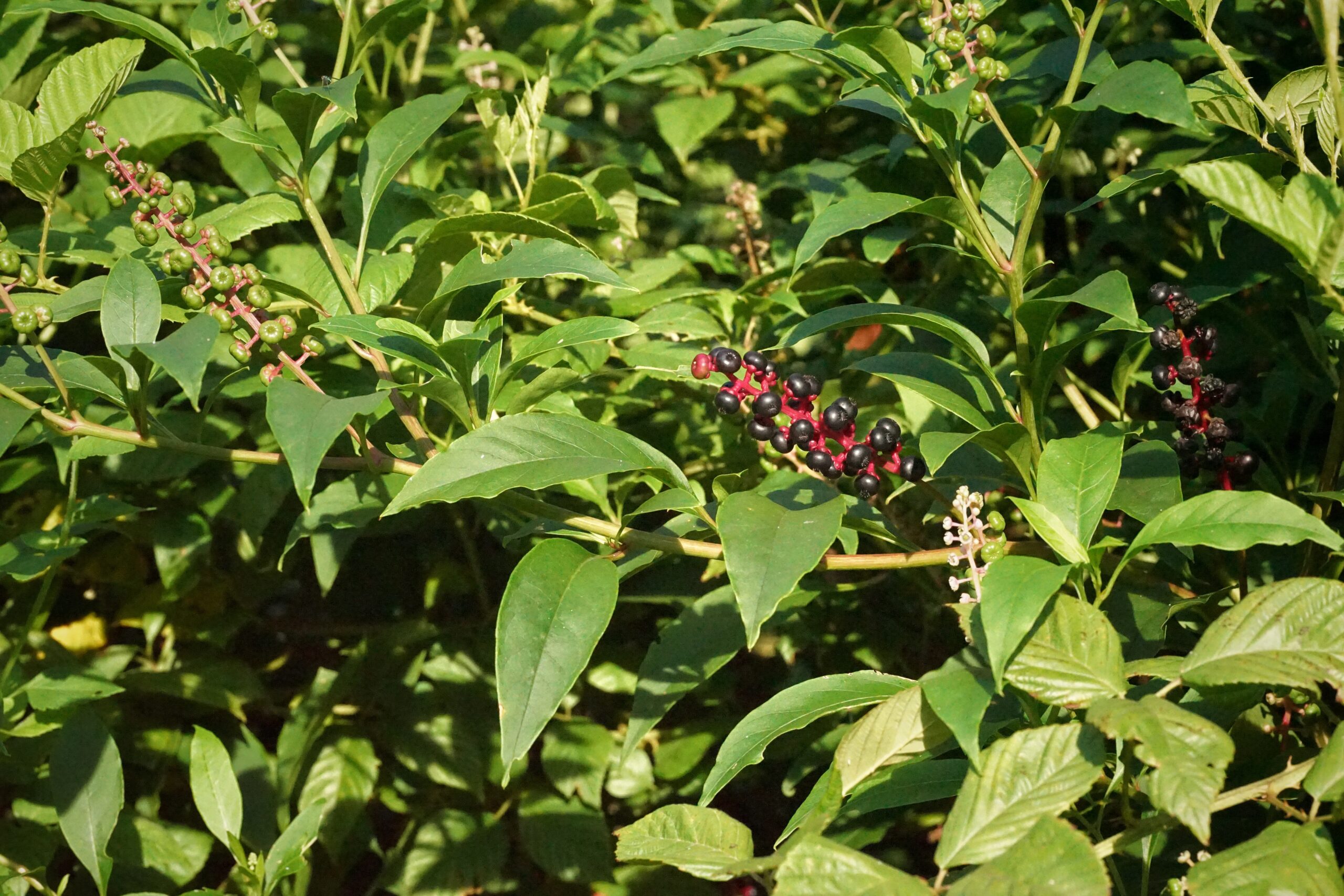
Recognizing Pokeweed
Understanding what pokeweed looks like is the first step in preventing accidental exposure.
Key features include:
-
Thick reddish-purple stems
-
Large, smooth-edged green leaves
-
Drooping clusters of dark purple-black berries
-
White to greenish flower clusters in early growth
It typically grows between 3 to 10 feet tall and thrives in disturbed soil, making it common near fences, compost piles, and abandoned lots.
Because the berries resemble edible fruits, children and pets are particularly at risk of accidental ingestion.
What Makes Pokeweed Dangerous?
All parts of the pokeweed plant are toxic, but toxicity levels vary by plant part and maturity.
The plant contains compounds such as:
-
Phytolaccatoxin
-
Phytolaccigenin
-
Lectins
-
Saponins
These substances can irritate the gastrointestinal system and, in larger amounts, affect other organ systems.
Most Toxic Parts
-
Roots (highest concentration of toxins)
-
Mature leaves
-
Stems
-
Unripe berries
Ripe berries are somewhat less toxic than roots but can still cause illness.
Symptoms of Pokeweed Poisoning
Ingestion of pokeweed may cause:
-
Nausea
-
Vomiting
-
Diarrhea
-
Abdominal cramps
-
Weakness
-
Dizziness
In severe cases (especially from root ingestion):
-
Low blood pressure
-
Difficulty breathing
-
Muscle spasms
-
Dehydration
Most cases involve gastrointestinal distress, but severity depends on quantity consumed and the individual’s size and sensitivity.
Children and pets are more vulnerable due to smaller body mass.
Why Birds Can Eat the Berries
An interesting ecological detail is that many bird species consume pokeweed berries without harm. Birds metabolize plant toxins differently than humans and often play a role in spreading the seeds.
This can make pokeweed seem deceptively safe, as wildlife interacts with it freely.
However, what is safe for birds is not necessarily safe for humans.
Historical and Traditional Uses
In certain traditional practices, young pokeweed leaves were boiled multiple times to remove toxins before consumption — a dish sometimes called “poke sallet.”
It is important to emphasize:
Improper preparation can result in poisoning.
Modern health authorities generally discourage foraging pokeweed unless guided by experienced experts, as misidentification and improper detoxification pose serious risks.

Risks in Home Gardens
Pokeweed frequently appears unintentionally in home gardens.
Common risk scenarios include:
-
Children picking berries
-
Pets chewing leaves
-
Homeowners pulling plants without gloves
-
Skin irritation from sap exposure
While skin contact is less dangerous than ingestion, sap may cause mild irritation in sensitive individuals.
Safe Removal Practices
If pokeweed appears on your property:
-
Wear gloves and protective clothing.
-
Avoid crushing berries unnecessarily.
-
Remove the entire root system — roots can regrow if partially left behind.
-
Dispose of plant material securely (avoid composting).
Because of the deep taproot system, removal may require effort.
When to Seek Medical Help
Immediate medical attention should be sought if someone has:
-
Ingested pokeweed
-
Developed severe gastrointestinal symptoms
-
Shown signs of dehydration
-
Experienced breathing difficulty
Poison control centers can provide guidance based on exposure level.
Ecological Role
Despite its toxicity to humans, pokeweed plays an ecological role:
-
Provides food for birds
-
Supports certain insect species
-
Contributes to seed dispersal networks
It is not an invasive threat in most native regions but can spread aggressively in disturbed areas.
The goal is not fear — but awareness.
Final Thoughts
Pokeweed is a visually striking plant that blends beauty with biological defense. Its bright stems and dark berries may make it appear ornamental, but its toxic properties require caution.
Understanding how to identify pokeweed, recognizing the symptoms of poisoning, and practicing safe removal can prevent accidental harm.
Nature often balances attraction with protection. In the case of pokeweed, admiration should be paired with distance and respect.