
What does colon cancer poop look like?

Colon cancer is the second-most-common cause of cancer death. While colon cancer can't be seen or felt, it reveals itself through some early symptoms. Changes in your bowel movements, like diarrhea or constipation, can help alert you to this disease. Paying attention to bowel movement changes is thus vital for the early diagnosis of this disease. The appearance of your poop and other symptoms are also useful clues potentially implying the presence of colon cancer.
Colon cancer affects about 4% of people during their life. It commonly affects people aged 50 and over, but it can also affect younger people.
Your poop can give you clues to colon cancer. The color is most important. Fresh blood can make your poop bright red or maroon. You might see streaks of blood on your poop. This is more likely to be the case when the cancer is located toward the end of the bowels (descending colon or rectum).
If the colon cancer is situated in the upper part of the colon, blood from it can trail across the whole colon and change the color of poop to dark brown or black. Your poop may look like black tar.
Other changes in the look of your poop coincide with diarrhea. Your feces may be soft or liquid. If you have constipation, on the other hand, your feces may be hard.
Colon cancer often makes the colon narrow. Your poop may be narrow as a result.
Changes in bowel movements in colon cancer
Almost two-thirds of people with colon cancer (65%) experience changes to their bowel movements. This is more common with left-sided cancer (i.e., cancer affecting the end of the colon).
Diarrhea in colon cancer
This is a common change in bowel movement in colon cancer. You have to defecate often, and your poop is semi-solid or liquid.
Diarrhea occurring for a day or two may be caused by something you've eaten. Loose bowel motions persisting for several days, though, should alert you to potential, underlying conditions.
If your poop has blood in it, you should talk to your doctor.
Constipation in colon cancer
Constipation is not a very common bowel movement change in colon cancer. Diarrhea is far more frequently seen.
If the colon is blocked by the cancer, though, there may be difficulty in passing bowel movements. This usually happens in late-stage cancer and is called bowel obstruction.
There may be abdominal swelling, vomiting, and pain increased by eating. This is an urgent situation, and you should go to the emergency room if you observe such symptoms.
Constant full feeling
If you have colon cancer, you may feel like you're never able to empty your bowels. Even just after rising from the toilet, you feel like you need to go again.
Other symptoms of colon cancer
If you notice changes in bowel movements, think about the other symptoms of colon cancer. Apart from the look of your poop, some common ones are.
- Abdominal pain that doesn't get better
- Bloating and cramps
- A pale look because of anemia caused by the blood loss
- Exhaustion or weakness
- Weight loss
Risk factors for colon cancer
The most important risk factor is age. Nearly 90% of all colon cancer cases are detected in people aged 50 and older.
Other risk factors include.
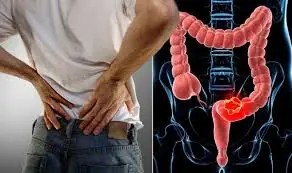
Significance of bowel movement change
When you notice bowel movement changes, think carefully. How does your poop look? Do you also have any of the other symptoms of colon cancer? If you also have some of the risk factors, you should talk to your physician as soon as possible.
Bowel movement changes are common with advancing age. By themselves, they're not very alarming, but if you have some of the risk factors or other symptoms of colon cancer, your doctor may want to have you tested. Notably, about 65% of people with colon cancer have bowel movement changes.
Generally, bowel movement changes, visible blood in your poop, and anemia are the most common symptoms of colon cancer.
Diagnosing colon cancer
It's important to diagnose colon cancer early. Noticing your bowel movement changes is a good first step. If you also have some other symptoms, you should report them to your physician.
Diagnosing colon cancer is done in various ways:
Physical examination and digital rectal examination
Your physician will examine you for any lumps in your abdomen. They will also feel your lymph nodes for any swelling.
A digital rectal examination tells your physician about any lumps or unusual feelings in the rectum.
Fecal occult blood test
Occult blood is a tiny amount of blood in your stool that you can't see. Laboratories use two types of tests to detect occult blood in stools — guaiac and immunochemical.
Hemoglobin level
Colon cancer leaks blood into your stool for a long time. You might become anemic, which can be detected by a blood test.
Sigmoidoscopy
A sigmoidoscope is a tube with a light at the end. Your physician uses it to look inside the rectum and inspect the end of the colon. The sigmoidoscope also has tools for collecting biopsies and removing polyps and tumors.
Colonoscopy
A colonoscope is a flexible tube your physician uses to see inside your colon. It is a very sensitive method of diagnosing colon cancers, with a 72% success rate.
Your physician can also remove any colon polyps they see, which can become cancers later. If they see an abnormal part of your colon, they can take a biopsy for closer examination.
A colonoscopy needs an empty bowel, so your physician will prescribe a laxative and perhaps a special diet. You'll be given a sleeping medicine before the procedure. The colonoscopy takes about an hour. If the colonoscope can't survey the whole colon, you will need a CT colonography.
CT colonography
Computed tomography (CT) scans produce images taken at different angles. They can detect more than 30% of colon cancers. This technique is also called virtual colonoscopy.
Conclusion
Colon cancer is often diagnosed late. Unfortunately, advanced cancer that has spread is associated with poor survival.
Paying attention to your bowel movement changes and other early symptoms can help detect this cancer early. If you have bowel movement changes that last more than a day or two, you should talk to your physician. Quick testing and diagnosis will enable you to receive treatment more quickly.