If there is one behavior almost every dog owner has witnessed, it is this: the intense, unapologetic sniff. Whether it’s greeting a guest at the door, investigating another dog at the park, or examining a stranger’s shoes with forensic-level focus, dogs rely heavily on their noses.
But is sniffing simply a quirky habit? Or is there something deeper behind it?
The answer lies in biology, evolution, communication, and even emotion.
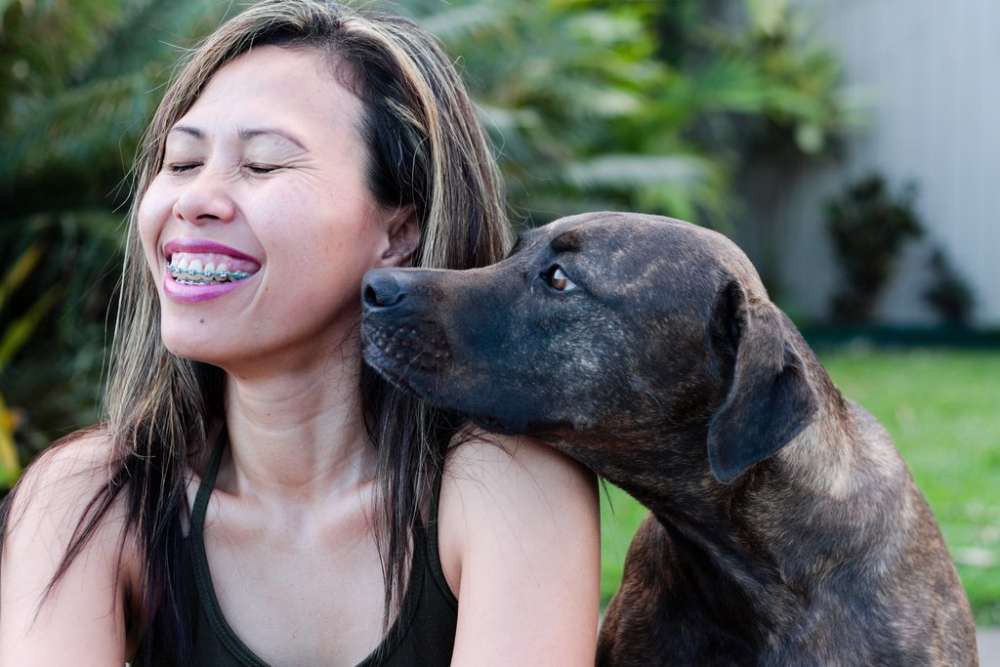
The Power of a Dog’s Nose
To understand sniffing behavior, we must first understand the sensory hierarchy in dogs. For humans, vision dominates perception. For dogs, scent is primary.
Dogs possess up to 300 million olfactory receptors, compared to about 5–6 million in humans. The area of the brain devoted to analyzing smells is proportionally far larger in dogs than in people. This means dogs do not just “notice” smells — they interpret them with extraordinary detail.
A single sniff can provide information about:
-
Identity
-
Sex
-
Emotional state
-
Diet
-
Health status
-
Hormonal changes
-
Environmental exposure
In practical terms, when a dog sniffs someone, it is conducting a full sensory background check.
Sniffing as Communication
Dogs experience the world socially through scent. In canine society, smell functions as a communication system.
When a dog approaches a person and begins sniffing, especially around hands, clothing, or lower body areas, it is gathering chemical signals. Humans emit subtle scent markers through sweat glands. These markers contain information about stress levels, mood, and even immune system status.
From the dog’s perspective, sniffing is not intrusive. It is equivalent to reading someone’s introduction.
In multi-dog interactions, sniffing is even more structured. Dogs often sniff:
-
The face
-
The ears
-
The flank
-
The anal region
These areas carry concentrated scent glands that provide detailed biological data.
With humans, dogs adapt this instinct to whatever scent sources are accessible.
The Evolutionary Basis
Sniffing is not a learned trick — it is a deeply ingrained survival mechanism.
Before domestication, ancestral canids relied on scent to:
-
Track prey
-
Detect predators
-
Identify pack members
-
Locate food
-
Assess mating readiness
Evolution reinforced olfactory dependence because survival depended on accurate scent interpretation.
Even though modern domestic dogs no longer hunt for survival, the neurological wiring remains intact. The behavior persists because it is biologically foundational.

Emotional Information Through Scent
Scientific studies suggest dogs can detect emotional changes in humans through scent.
When humans experience fear, stress, or happiness, hormonal changes alter body odor. Dogs are capable of detecting these shifts.
This explains why:
-
Dogs may become alert when someone is anxious
-
Service dogs can respond to panic attacks
-
Therapy dogs react to emotional distress
Sniffing is often the first step in assessing emotional context.
It is not random curiosity. It is data collection.
Is It Just Instinct?
Instinct is the foundation — but learning shapes it.
Puppies begin exploring the world through scent almost immediately. As they grow, positive or negative experiences reinforce sniffing behavior.
For example:
-
A dog rewarded for investigating during training may sniff more actively.
-
Detection dogs are trained to refine natural scent-tracking abilities.
-
A dog that learns strangers bring treats may intensify greeting sniffs.
Thus, sniffing is instinct amplified by experience.
Why Do Dogs Sniff Certain People More?
Dogs sometimes show heightened sniffing toward specific individuals. Possible reasons include:
-
Novelty
New scents are more interesting. A person who has recently interacted with other animals, been outdoors, or used unfamiliar products may carry intriguing odors. -
Hormonal Signals
Dogs may react to hormonal fluctuations, including pregnancy or illness. -
Food Residue
Dogs detect even microscopic traces of food particles on hands or clothing. -
Emotional State
Stress and adrenaline subtly change human scent profiles.
To the dog, each variation represents information worth analyzing.
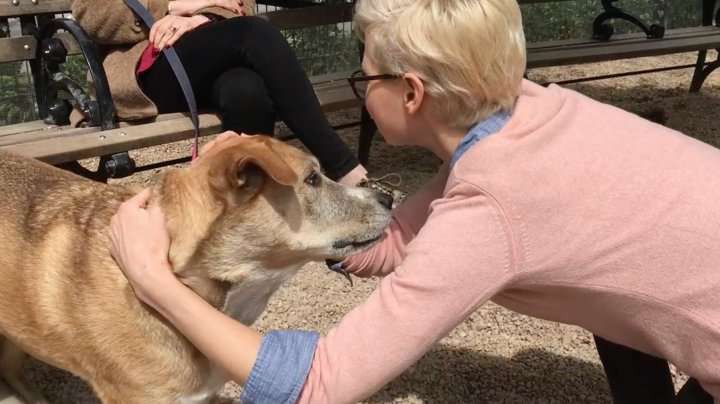
Sniffing as Mental Stimulation
Sniffing is cognitively enriching.
Allowing dogs to sniff during walks significantly increases mental engagement. Studies in canine behavior suggest that scent exploration reduces stress and promotes psychological well-being.
From a behavioral science perspective, sniffing:
-
Activates problem-solving circuits
-
Encourages exploratory learning
-
Reduces boredom-related behaviors
-
Lowers heart rate
Restricting sniffing excessively can actually increase frustration in some dogs.
For them, a walk is not just exercise — it is sensory research.
When Sniffing Becomes Excessive
While sniffing is normal, there are circumstances where it may signal something else.
Excessive, compulsive sniffing could indicate:
-
Anxiety
-
Stress
-
Obsessive tendencies
-
Neurological issues (rare cases)
If sniffing interferes with daily functioning or appears sudden and extreme, veterinary consultation is advisable.
However, in most cases, sniffing is simply healthy canine behavior.
Cultural Perception vs. Canine Reality
Humans often interpret intense sniffing as awkward or embarrassing. Particularly when dogs sniff sensitive areas of a person’s body.
From a canine standpoint, those areas contain higher concentrations of apocrine sweat glands, which produce stronger scent signals.
The behavior is not social commentary.
It is chemical curiosity.
Understanding this reduces unnecessary correction or punishment.
Training and Boundaries
Although sniffing is natural, dogs can be trained to greet politely.
Techniques include:
-
Redirecting to hand sniffing
-
Reinforcing calm greetings
-
Teaching “leave it” commands
-
Using controlled introductions
Training does not eliminate instinct — it shapes its expression.
Beyond Instinct: A Sophisticated Sensory System
Sniffing is both primitive and advanced.
It originates from ancient survival patterns, yet modern science continues to uncover its complexity. Dogs can detect:
-
Certain cancers
-
Low blood sugar episodes
-
Seizure onset
-
Viral infections
These abilities stem from the same olfactory power that drives everyday sniffing behavior.
What appears simple is neurologically sophisticated.
Final Thoughts
Dog sniffing behavior is not random, rude, or meaningless. It is a highly evolved sensory strategy rooted in survival, communication, and emotional intelligence.
When a dog sniffs someone, it is not merely being curious.
It is analyzing identity.
Assessing safety.
Gathering emotional data.
Mapping its environment.
Instinct is the foundation — but the function goes far beyond instinct alone.
In the canine world, scent is language.
And every sniff is a conversation.