Why Do Japanese People Wear Socks to Sleep All Year Round?
The Surprising Habit That Challenges Everything You Know About Comfort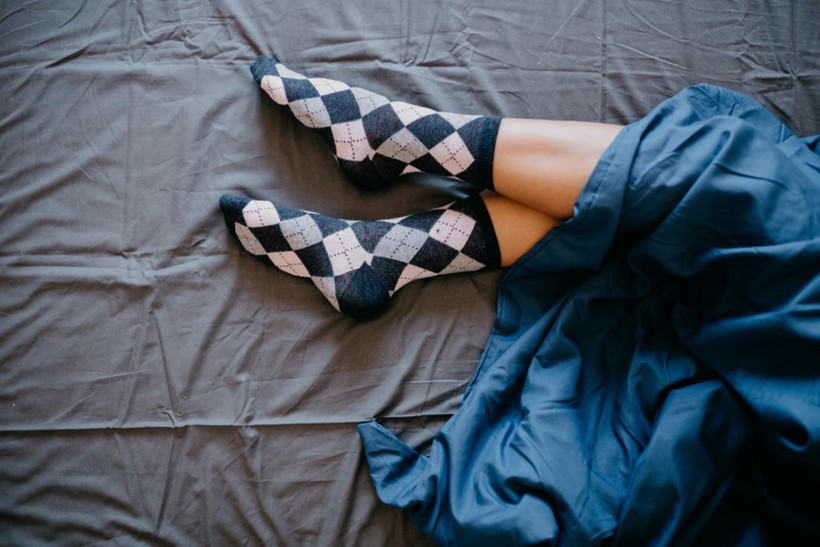
In many parts of the world, wearing socks to bed is seen as a winter-only habit—or even something uncomfortable and unnecessary. Yet in Japan, people often sleep with socks on regardless of the season, whether it’s a freezing January night or a humid summer evening. This seemingly small habit has sparked curiosity online and even disbelief among foreigners. So why do Japanese people do it? The answer lies at the intersection of traditional health philosophy, modern science, and a deeply rooted cultural mindset about the body.
It’s Not About Cold—It’s About Circulation
Contrary to popular belief, Japanese people don’t wear socks to sleep simply because they feel cold. In fact, many do so even when the room temperature is warm. The real reason is blood circulation.
According to Japanese health experts, cold feet are a sign of poor peripheral circulation. When the feet are cold, blood vessels constrict, making it harder for the body to relax and fall into deep sleep. Wearing socks gently warms the feet, encourages blood vessels to dilate, and helps the body transition into a restful state more efficiently.
Several sleep studies support this idea. Research has shown that warming the feet can shorten the time it takes to fall asleep and improve overall sleep quality by stabilizing core body temperature. In short, warm feet tell the brain: it’s safe to rest.
Rooted in Traditional Japanese Health Beliefs
The habit is also closely tied to traditional Eastern medicine, which strongly influences Japanese health culture. In concepts such as kampo (traditional Japanese medicine), the body is believed to function best when warmth flows smoothly from the core to the extremities.
Cold feet are considered a sign of internal imbalance, especially among women, the elderly, and people who sit for long hours. This condition, known in Japan as hiesho (sensitivity to cold), is taken seriously. Wearing socks to sleep is seen as a simple, non-invasive way to correct this imbalance and protect long-term health.
Unlike in some cultures where discomfort is tolerated, Japanese health philosophy emphasizes preventive care through small daily habits. Socks at bedtime are one of them.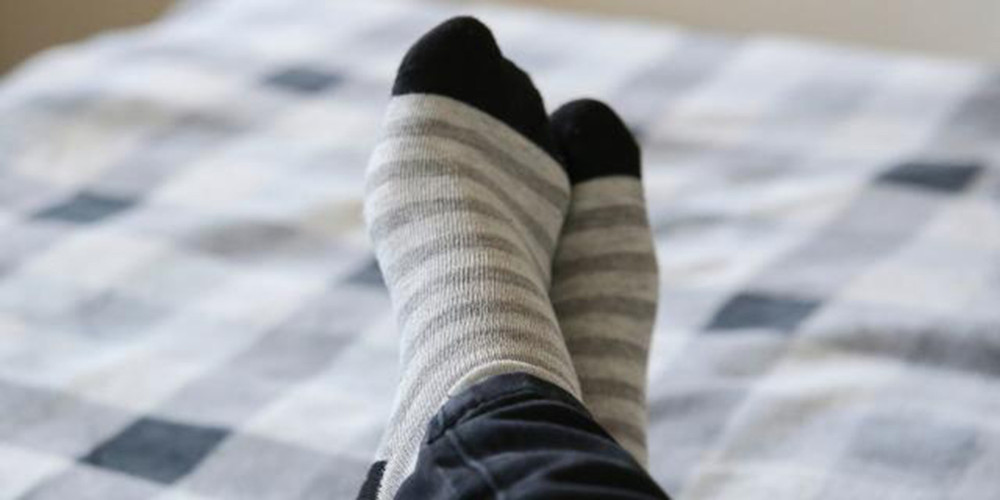
Summer Socks? Yes—and Here’s Why
What truly shocks outsiders is that many Japanese people wear socks to bed even in summer. With Japan’s hot and humid climate, this seems counterintuitive. However, air conditioning changes everything.
Japanese summers are brutal, and air conditioners often run all night. While the room may feel comfortable, cold air blowing directly on the feet can disrupt circulation and cause muscle stiffness, cramps, or even digestive discomfort. Lightweight, breathable socks act as a barrier, protecting the feet without overheating the body.
Importantly, these are not thick winter socks. Most people choose thin cotton or silk socks designed specifically for sleeping, allowing moisture to escape while maintaining warmth.
A Culture That Values Sleep Quality
Japan is known for its demanding work culture and chronic sleep deprivation. As a result, sleep quality is treated almost like a survival skill. From specialized mattresses to blackout curtains and sleep cafés, the country invests heavily in better rest.
Wearing socks to sleep fits perfectly into this mindset. It’s a low-effort, low-cost adjustment that promises better sleep—and Japanese people are famously practical when it comes to health optimization.
Rather than asking “Is this comfortable right now?”, the question becomes “Will this help me function better tomorrow?”
Not Just Habit—There’s Science Behind It
Modern science backs up what Japanese culture has practiced for decades. Studies published in sleep medicine journals suggest that warming the extremities helps regulate circadian rhythms. When the feet are warm, the body can more easily lower its core temperature, a key signal for sleep onset.
This explains why people who struggle with insomnia are sometimes advised to wear socks to bed—a tip that often surprises but works.
A Small Habit with a Big Message
At first glance, wearing socks to sleep year-round may seem odd or even unnecessary. But in Japan, it reflects a broader philosophy: health is built through small, consistent choices, not dramatic interventions.
In a world obsessed with quick fixes and expensive wellness trends, the Japanese approach feels almost shocking in its simplicity. No supplements. No gadgets. Just a pair of socks—and a better night’s sleep.
Perhaps the real question isn’t why Japanese people wear socks to sleep, but why the rest of the world doesn’t.