ridge Leaking Water? Don’t Panic — Try These Fixes First
Finding water pooling under or inside a refrigerator can be alarming. Many people immediately assume a serious mechanical failure and rush to call a technician. In reality, most refrigerator leaks are caused by minor, easily fixable issues.
Before spending money on repairs, check the common causes below. In many cases, a simple cleaning or adjustment solves the problem.


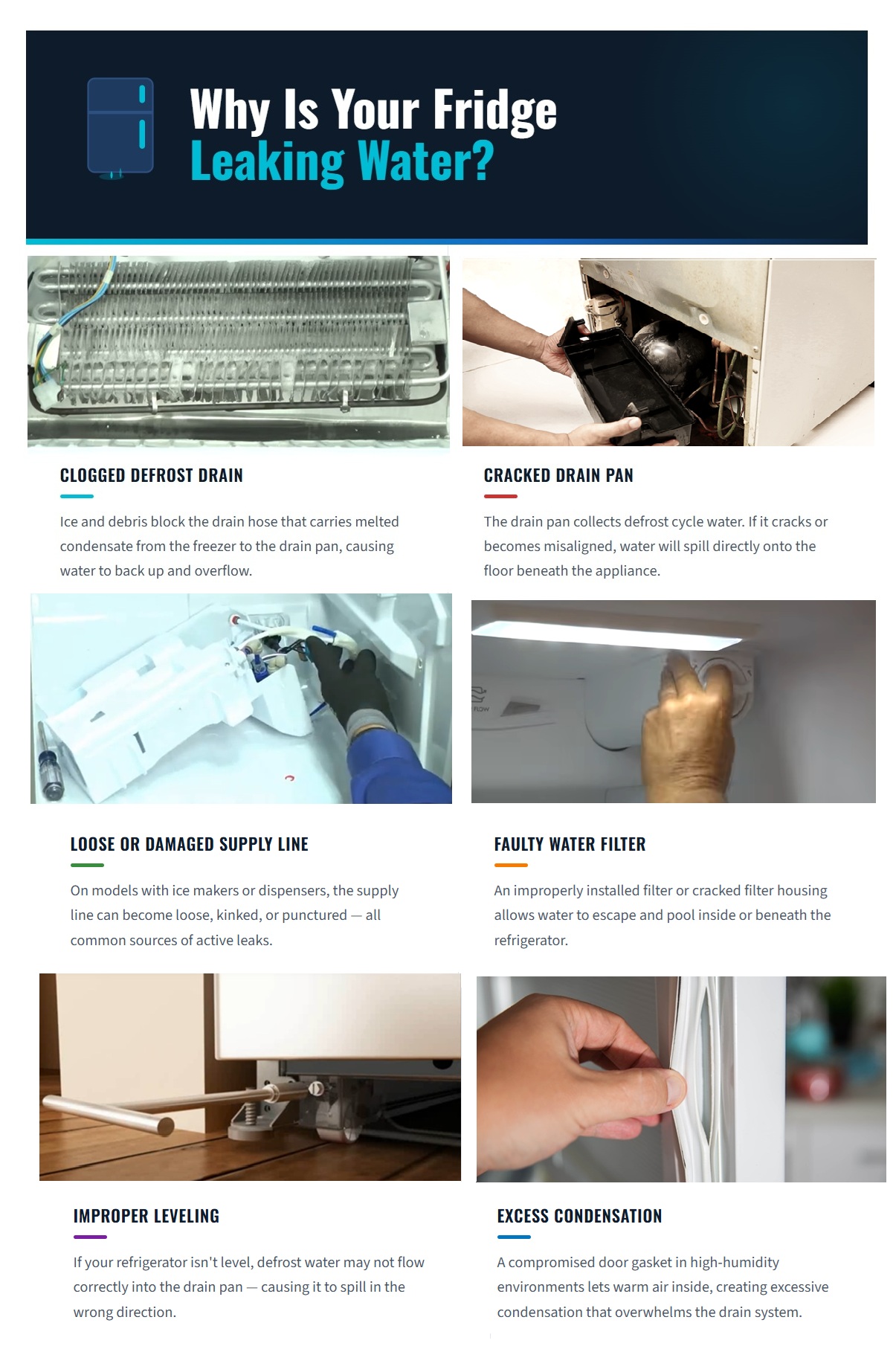
1. Clogged Defrost Drain (Most Common Cause)
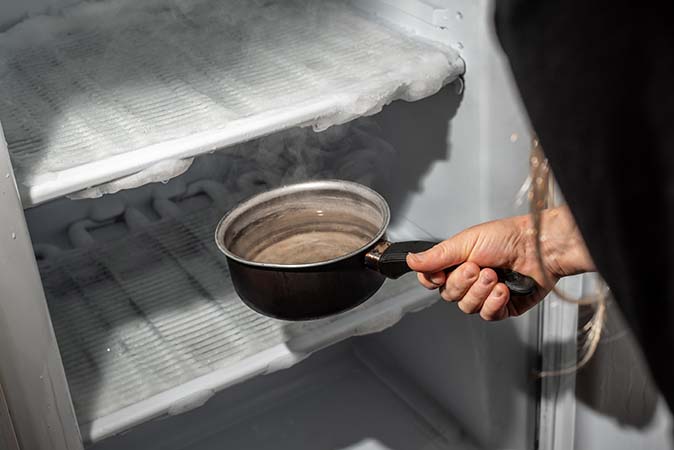
Modern refrigerators automatically defrost. During this process, melted ice drains through a small hole and tube into a drip pan beneath the appliance.
If that drain becomes blocked by:
-
Food particles
-
Ice buildup
-
Dust or debris
water cannot flow properly and instead pools inside the fridge or leaks onto the floor.
How to fix it:
-
Unplug the refrigerator.
-
Locate the drain hole (usually at the back of the fridge interior).
-
Flush it gently with warm water using a syringe or turkey baster.
-
If clogged deeper inside, use a flexible cleaning brush or pipe cleaner.
This resolves the majority of water leakage cases.
2. Cracked or Misaligned Drain Pan
The drain pan collects defrost water and allows it to evaporate.
If the pan is:
-
Cracked
-
Not seated properly
-
Overfilled
water may spill onto the floor.
What to do:
-
Remove the lower back panel.
-
Inspect the pan for cracks.
-
Reposition or replace if damaged.
Drain pans are inexpensive and easy to replace.
3. Damaged Door Seal (Gasket)
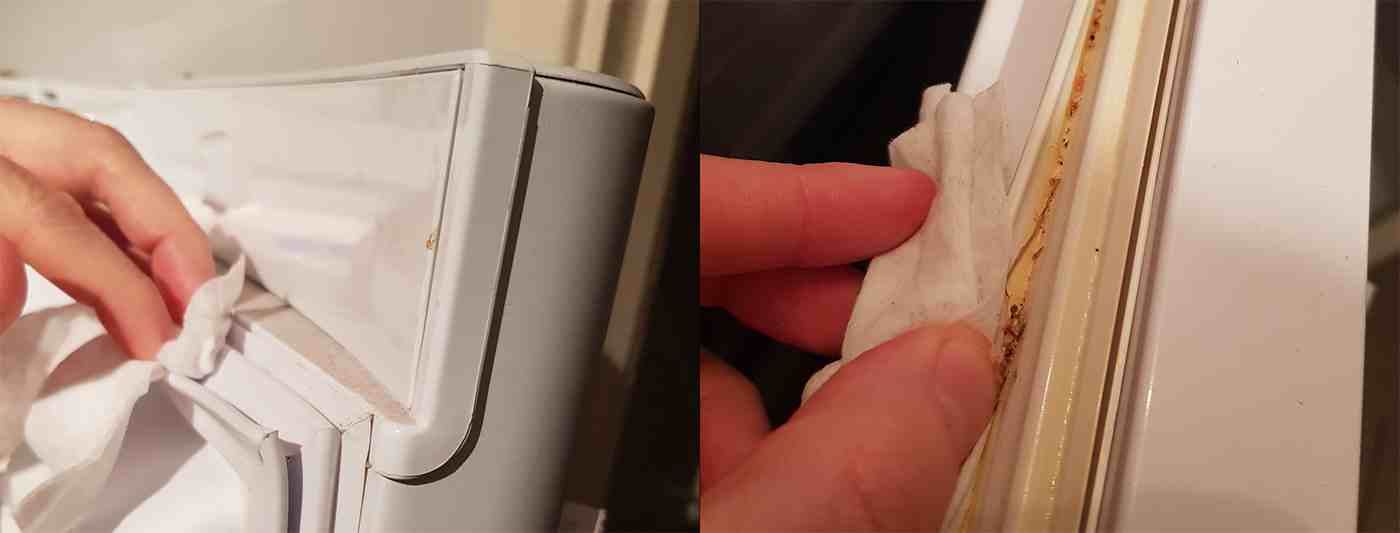
A worn or loose door gasket allows warm air to enter the refrigerator. This increases condensation, which may accumulate and drip.
Check for:
-
Gaps in the seal
-
Cracks or brittleness
-
Loose edges
Quick test:
Close the door on a piece of paper. If it slides out easily, the seal may not be tight enough.
Replacing a gasket is usually straightforward and cost-effective.
4. Refrigerator Not Level
If the appliance tilts forward, water may not flow correctly into the drain system.
Use a level to check alignment. Adjust the front leveling legs so the fridge tilts slightly backward. This helps gravity direct water toward the drain.
5. Blocked Water Supply Line (If Connected to Ice Maker)
For refrigerators with ice makers or water dispensers, leaks may come from:
-
Loose water connections
-
Cracked supply tubing
-
Faulty inlet valve
Inspect the line behind the fridge for moisture or drips. Tighten fittings if necessary.
When to Call a Technician
Professional repair may be needed if you notice:
-
Continuous leaking after cleaning the drain
-
Internal ice buildup that returns quickly
-
Electrical issues
-
Loud compressor noises
Persistent problems could indicate a more serious cooling system malfunction.
Preventive Maintenance Tips
To avoid future leaks:
-
Clean the drain hole every 3–6 months
-
Keep food away from the back wall
-
Check door seals regularly
-
Vacuum coils annually
-
Avoid overloading shelves
Routine maintenance significantly extends refrigerator lifespan.
Final Thoughts
Water under a refrigerator does not automatically mean expensive repairs. In most cases, the cause is minor and easily corrected at home.
Before calling a technician, check:
-
Defrost drain
-
Drain pan
-
Door seal
-
Appliance leveling
-
Water supply line
A few simple steps can restore normal function and save money.