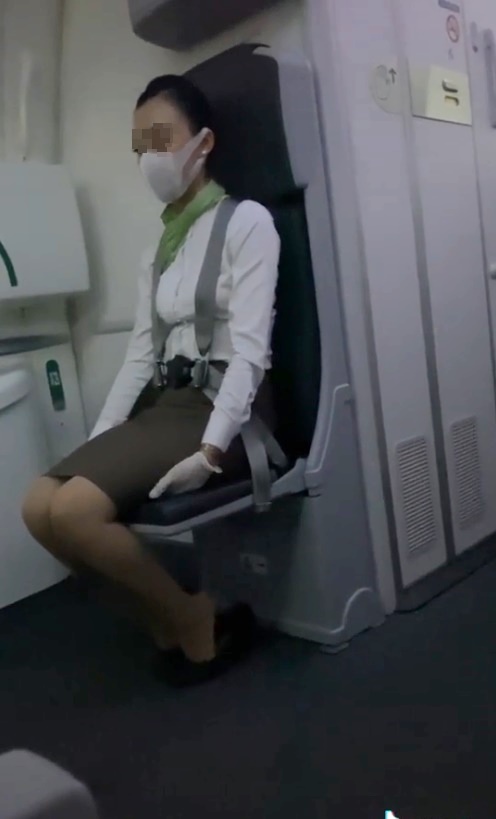
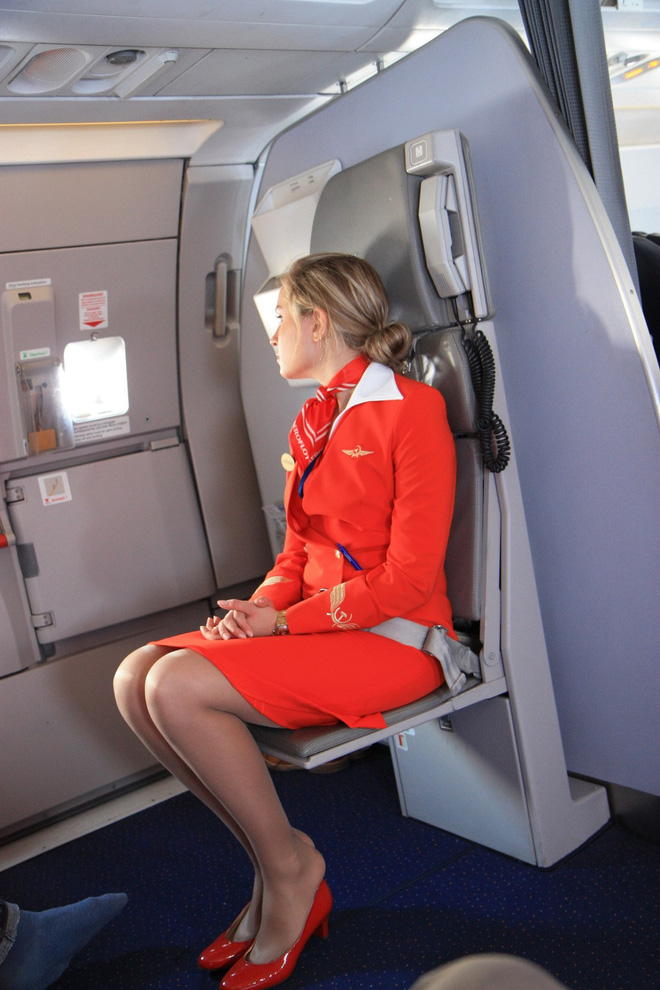
Air travel involves carefully designed safety procedures that most passengers rarely notice. From the moment passengers board the aircraft to the moment it lands, every action performed by the cabin crew follows specific safety guidelines created by aviation authorities. One behavior that sometimes catches the attention of passengers is that flight attendants often sit with their hands placed under their thighs or legs during takeoff and landing.
At first glance, this posture may seem unusual or uncomfortable. However, it is actually part of an important safety position used by cabin crew members. This posture is designed to help protect the crew and ensure they are ready to react quickly in case of an emergency.
Understanding why cabin crew sit this way reveals how carefully aviation procedures are planned to maximize safety for everyone on board.

The “Brace Position” for Cabin Crew
The posture in which flight attendants place their hands under their legs is part of what is known as the “brace position.” During critical phases of flight—especially takeoff and landing—cabin crew must adopt a position that minimizes the risk of injury if something unexpected occurs.
Takeoff and landing are considered the most sensitive parts of a flight because this is when aircraft are closest to the ground and undergoing significant changes in speed and direction. Although modern aviation is extremely safe, crews are trained to prepare for every possibility.
By placing their hands under their thighs and sitting upright with their feet firmly on the floor, cabin crew members help stabilize their bodies and reduce unnecessary movement.
Preventing Injury During Sudden Impact
One of the primary reasons for this posture is injury prevention. If an aircraft experiences sudden deceleration, turbulence, or an emergency landing, loose arms and hands could easily strike nearby surfaces.
By securing their hands under their legs, flight attendants keep their arms close to the body. This position reduces the chance of arms or hands hitting seat structures, walls, or other equipment during a sudden movement.
The position also helps protect the head, spine, and limbs by keeping the body aligned with the seat.
Maintaining Proper Body Alignment
Another important purpose of the brace position is maintaining correct body posture. When seated properly with the back straight and feet flat on the floor, the body is better supported by the seat structure.
This alignment helps distribute force more evenly across the body if a sudden stop or impact occurs. The seat absorbs much of the force, reducing strain on the spine and muscles.
A stable posture also helps crew members remain alert and ready to move immediately if needed.
Keeping Hands Free for Immediate Action
Although it may seem like sitting on their hands would restrict movement, the position actually helps cabin crew prepare for action.
In the event of an emergency, flight attendants must react very quickly. Their responsibilities may include opening emergency exits, assisting passengers, directing evacuations, and ensuring safety procedures are followed.
By keeping their hands still and close to their bodies, crew members avoid unnecessary movements during takeoff. Once the aircraft reaches a safe altitude, they can easily move their hands and resume normal duties.
A Time for Mental Preparation
Another important aspect of this moment is mental focus. During takeoff and landing, cabin crew are not simply sitting quietly—they are mentally reviewing emergency procedures.
This process is sometimes referred to as a “silent review.” During this time, flight attendants may mentally go through safety steps such as evacuation procedures, door operation, communication signals, and passenger assistance protocols.
This mental rehearsal helps ensure that if an emergency were to occur, the crew would be able to act quickly and confidently.
Why Passengers Don’t Use the Same Position
Passengers may notice that their own brace positions during safety demonstrations look slightly different from those used by the cabin crew.
Passengers are usually instructed to lean forward with their heads down and arms positioned to protect the head. This position is designed to reduce injury during impact while seated in a passenger seat.
Cabin crew members, however, must remain upright because they need to be able to stand and move immediately if an emergency occurs. Their brace position balances safety with readiness for action.
Aviation Safety Training
Flight attendants undergo extensive safety training before they begin working on aircraft. This training includes emergency procedures, evacuation drills, firefighting techniques, and first aid.
Learning the correct brace position is part of this training. Crew members practice these procedures repeatedly to ensure they can perform them automatically under pressure.
Although emergencies are rare in modern aviation, preparation is essential. Every safety detail—from seatbelt instructions to crew seating posture—is carefully designed based on research and experience.
Why Safety Procedures Matter
Air travel is widely recognized as one of the safest forms of transportation. This high level of safety is not accidental. It is the result of strict regulations, advanced engineering, and well-trained professionals.
Many procedures that may seem small or unusual—such as where a crew member places their hands—are actually part of larger safety systems.
These practices help ensure that if something unexpected occurs, trained crew members are prepared to respond immediately and effectively.
Conclusion
The reason cabin crew place their hands under their legs during takeoff is not random or symbolic. It is part of a carefully designed brace position intended to protect the crew and keep them ready for action during the most critical phases of flight.
This posture helps reduce the risk of injury, maintain body stability, and allow flight attendants to focus on safety procedures. It also highlights the level of preparation involved in aviation safety.
While passengers may rarely think about these details, they demonstrate how seriously the aviation industry takes the responsibility of protecting everyone on board. Even the smallest actions—like where to place your hands—can play an important role in keeping flights safe.