A Common Phone-Charging Habit Is Allowing Hackers to Steal Bank Accounts — Without Victims Knowing
Cybersecurity experts are warning that a charging habit many people practice every day could silently expose their personal data — including bank account information — to criminals.
This threat is becoming increasingly common as more individuals rely on public charging stations in cafés, airports, malls, offices, and even taxis.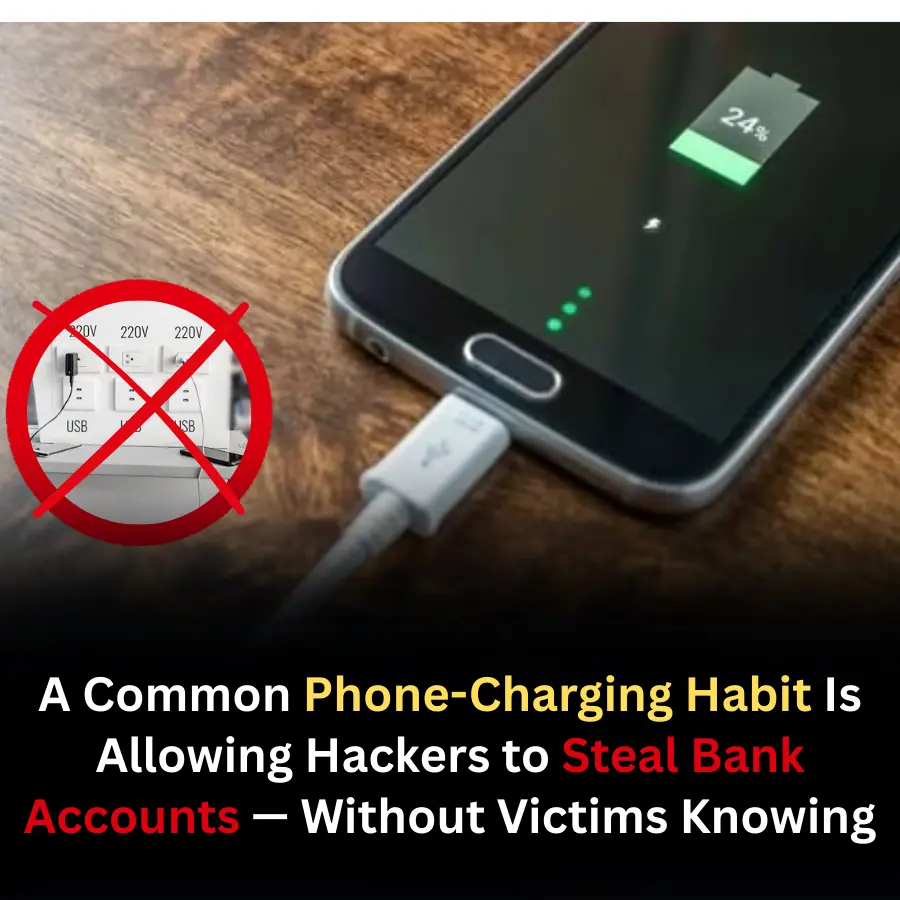
The Hidden Risk Behind “Juice Jacking”
The dangerous habit is charging your phone using public USB ports.
This attack method, called juice jacking, allows hackers to install malware or extract personal data the moment someone plugs their phone into an infected USB charging station. Unlike a normal power outlet, USB ports can transmit both electricity and data — giving cybercriminals a direct pathway into the device.
Once infected, hackers can:
-
Access saved bank accounts and passwords
-
Intercept OTP codes
-
Monitor keystrokes
-
Control the device remotely
-
Steal personal identity information
The frightening part is that the victim often has no idea that the attack has occurred.
Real-World Cases Are Increasing
Cybersecurity units in several countries have reported cases in which users mysteriously lost money from their bank accounts after charging their phones in public. Investigations revealed that malware had been installed during charging, granting criminals remote access.
Hackers typically target:
-
Airports
-
Bus/metro stations
-
Shopping centers
-
Hotel lobbies
-
Workspaces with free USB hubs
Because these USB ports appear harmless and convenient, many people let their guard down.
How Hackers Steal Bank Accounts Through Charging Ports
When a compromised USB port is used:
-
Malware is automatically transferred onto the phone.
-
The malicious software reads stored banking information.
-
It bypasses security layers using screen overlays or stolen OTPs.
-
Funds are quietly withdrawn — often in small amounts at first.
Victims may only discover the issue days or weeks later, when unauthorized transactions appear on their bank statements.
How to Protect Yourself
Experts recommend several important precautions:
1. Avoid public USB charging ports entirely.
This is the most effective way to avoid juice jacking.
2. Only use wall outlets or your own charger.
Traditional electrical plugs cannot transfer data.
3. Use a portable power bank.
This eliminates the need for public charging.
4. Carry a “USB data blocker.”
These adapters prevent data transfer and allow only electricity to pass through.
5. Never use unknown or shared charging cables.
Some cables are modified by hackers to inject malware.
6. Enable two-factor authentication for banking apps.
This adds an extra layer of protection if your device is compromised.
Conclusion
A simple act like charging a phone should be harmless — but using public USB ports can silently expose your financial life to criminals. Cybersecurity specialists emphasize that avoiding this one habit may be the easiest and most effective way to protect your bank accounts.